Renault Master (Fourth generation)

Renault Master 4 in Andorra la Vella (Andorra)
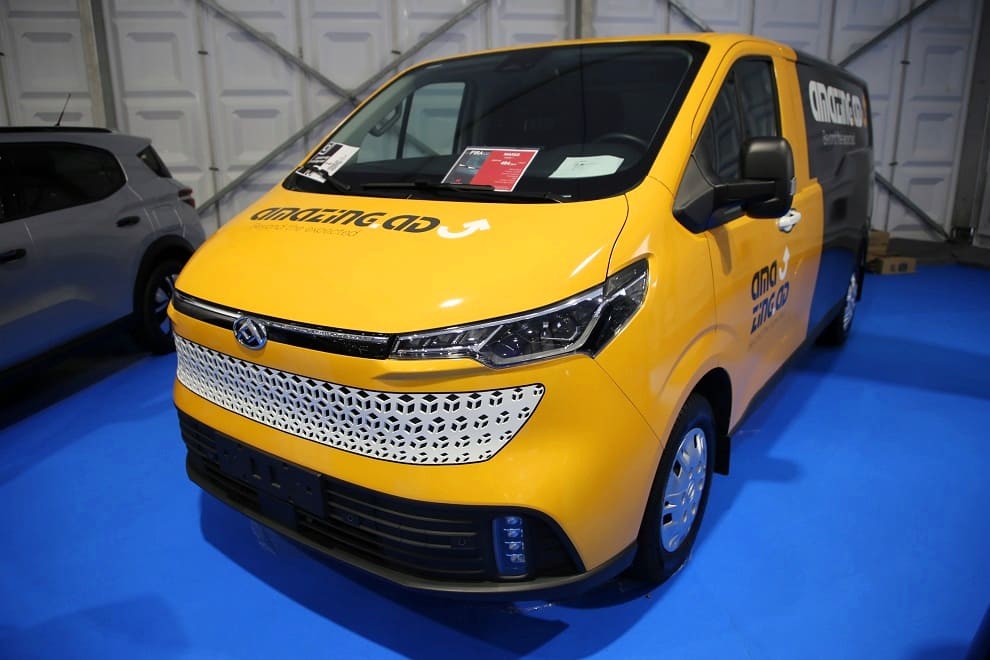
The Renault Master IV is a light commercial vehicle that will be produced by the French automobile manufacturer Renault since 2024.
History
In 2019, the Master III was significantly updated and stage 3 was launched. Despite the upgrade, the technical basis of this third generation is already outdated, since the first phase of the Master III was presented in 2010.
Development and design
The Master IV project was launched in the early 2020s under the name “XDD”. The platform was developed in partnership with the German manufacturer Mercedes-Benz. This partnership, signed in 2010 between the Renault Group and Daimler, has already been realized in 2021 with the production of the Renault Kangoo III and the Mercedes-Benz Citan W420 at the Maubeuge plant. The Master IV shares many components with the Mercedes-Benz Sprinter III, mainly at the technical level, while the design remains independent for each brand.
After successful winter testing in Scandinavia, the Master IV prototype, disguised, travelled to Spain to test its resistance to extreme temperatures.
Presentation
On 21 November 2023, the 17th edition of the Solutrans exhibition dedicated to road and urban transport took place at Eurexpo near Lyon (Rhône-Alpes). Held every two years, this event was the venue for the premiere of the Renault Master IV.
Production
At the end of 2023, production of the fourth generation of the Master started at the Batilly plant (France). By the end of the year, 164 diesel models and 52 E-Tech models had been produced.
On the occasion of the IAA Transportation 2024 exhibition, the Master IV was chosen as the International Van of the Year 2025.
Models
Dimensions (L et H)
The Renault Master IV is available in several models with three different wheelbases: L1, L2 and L3. Two heights are also available: H1 and H2.
Modifications
Advance
The standard “Advance” trim level includes a 3.5-inch TFT digital instrument cluster, a 7-inch digital display (on the E-Tech Electric), 180° opening rear doors, 16-inch steel wheels, dynamic braking system, front airbag, speed limiter and cruise control, lane departure warning, parking sensors, automatic emergency braking, hill start assist, electrically adjustable and heated exterior mirrors, adjustable driver’s seat, 2 fixed passenger seats, manual air conditioning, 12 power outlets and two USB Type-C ports on the center console.
Extra
The Extra trim is the most premium trim for the Master IV. It includes heather grey fabric upholstery with blue stitching, body-color grille surround, LED interior and cargo area lighting, rear view camera, automatic air conditioning, navigation and built-in Google services, electric front windows and a 12V socket in the luggage compartment.
Gearbox
The Master IV can be equipped with two types of gearboxes. These are a 6-speed manual and a new 9-speed automatic transmission with EAG9 torque converter, specially developed for the fourth generation Master.
Brakes
The braking system in this generation has been significantly improved compared to the previous one. Regardless of the vehicle load, it adapts, providing the same feeling when pressing the brake pedal.
In addition, this system allows for faster activation of the automatic emergency braking system, which reduces reaction time by half. And in electric versions, it helps to recover kinetic energy, which in turn increases their autonomy.
Body
Between the third and fourth generation of the Master, the main changes occurred at the front. The car has become more modern thanks to a wide radiator grille with a new brand logo for 2021, a vertical front end and a horizontal bonnet. The rear end retains the asymmetrical window cutout, descending to the right, from the appearance of the Renault Master II.

Manufacturer: Renault Trucks (Renault Group)
Assembly: Batilly (France)
Years of production: 2024—
Length: 5680 mm
Width: 2070 mm
Height: 2503 mm
Engine: 4 cylinders; 1997 cc
Power: 170 HP
Max speed: 170 km/h
Fuel consumption: 8 l/100 km
Weight: 2081 kg
Load capacity: 1600 kg
See also Transport blog
See also Cars blog
See also Motorcycles blog
See also Buses blog
See also Shipbuilding blog
See also Motors and Engines blog
See also Trains and railways blog
See also Trucks and Cargo Vehicles blog
See also Tractors and Special Equipment blog
See also Tanks and Armored Vehicles
See also Airplanes blog
See also Helicopters blog
See also Artillery, Missiles and Rockets blog
See also Bicycles blog