Junkers J9 (D.I)
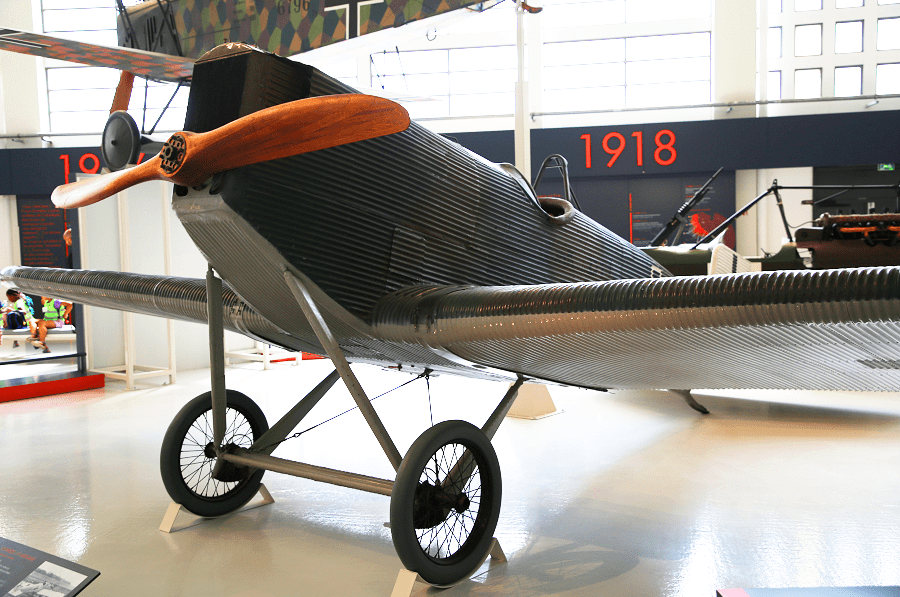
The Junkers D.I (factory designation J9) was a monoplane fighter aircraft produced in Germany late in World War I, significant for becoming the first all-metal fighter to enter service. The prototype, a private venture by Junkers named the J7, first flew on 17 September 1917, going through nearly a half-dozen detail changes in its design during its tests. When it was demonstrated to the Idflieg early the following year it proved impressive enough to result in an order for three additional aircraft for trials. The changes made by Junkers were significant enough for the firm to rename the next example the J9, which was supplied to the Idflieg instead of the three J7s ordered.
Lengthened-fuselage and extended wingspan Junkers D.I (J.9/II) undergoing evaluation
During tests, the J9 lacked the manoeuvrability necessary for a front-line fighter but was judged fit for a naval fighter and a batch of 12 was ordered. These were supplied to a naval unit by September 1918, which then moved to the Eastern Front after the Armistice.
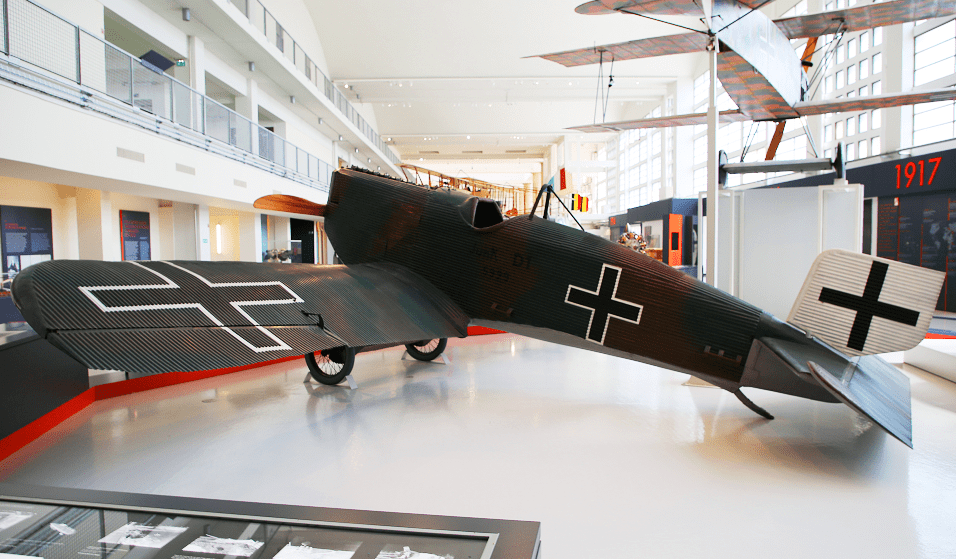
Country: Germany
Year: 1918
Production: 41 planes
Crew: 1 pilot
Length: 7.25 m (23 ft 9.4 in)
Wingspan: 9.00 m (29 ft 6.3 in)
Height: 2.60 m (8 ft 6 in)
Powerplant: BMW III I6
Power: 185 HP (138 kW)
Maximum speed: 176 km/h (109 mph, 95 kn)
Ceiling: 6,000 m (19,700 ft)
Weight: 654 kg (1,438 lb)
Armament: 2 × fixed Maschinengewehr 08 (MG 08) (7.92 mm) machine guns