Btissam Diliz’s personal story begins in France. Born in Châteauroux, in central France, she grew up and completed her studies there. From an early age, her entrepreneurial spirit drove her to launch her first ventures in Île-de-France, in Paris.
She later chose a more hands-on path by opening a tea room in Blois, which she successfully ran for ten years. A decade in the business provided her with a deep understanding of what working in the food industry truly entails: the pace, the workload, the pressure, and the day-to-day management.
This chapter of her life also allowed the young entrepreneur – a wife and mother of two kids – to envision a new life plan: finding a place that would better suit her family. That place became Andorra.
We sat down with Btissam to talk about the concept behind her patisserie, Dolça: its distinctive identity, its strong family focus, and the trust she has patiently built with the local community.
What convinced you to leave France and settle in Andorra?
A friend introduced me to the place. She told me, “You’re going to love it – just stop by and take a look.” I came as a tourist, simply to see… and I fell in love with Andorra.
After that, I came back every month, just to escape my daily routine in Blois, where I was running my tea room and working nonstop. I would take a few days to get some fresh air. And one day I thought: “if I’m coming here every month, it’s because I truly want to be here”. So I decided to close my business and move here for good.
I also realized that it’s a very child-friendly place, which mattered a lot to me since I have two children. I weighed the pros and cons. My tea room had been running for ten years, I had loyal customers, everything was working well. But behind the appealing image of a pastry shop – polished display cases, desserts that make you want to try everything – there are very real challenges, and French regulations have become, over time, heavier and heavier.
Could you tell us how the opening of your pastry shop in Andorra unfolded, from choosing the space to opening day?
For me, everything went very smoothly. I worked with a firm that handled the administrative steps from A to Z. Then, after a few months here, I needed to find a location. It happened pretty fast: I arrived in early April and signed the lease at the beginning of June.
Then came the renovations, because the space used to be a clothing store. Everything had to be brought up to food-service standards: ventilation, accessibility… In two months, it was done, and I was able to start living my dream.
What is the concept behind Dolça?
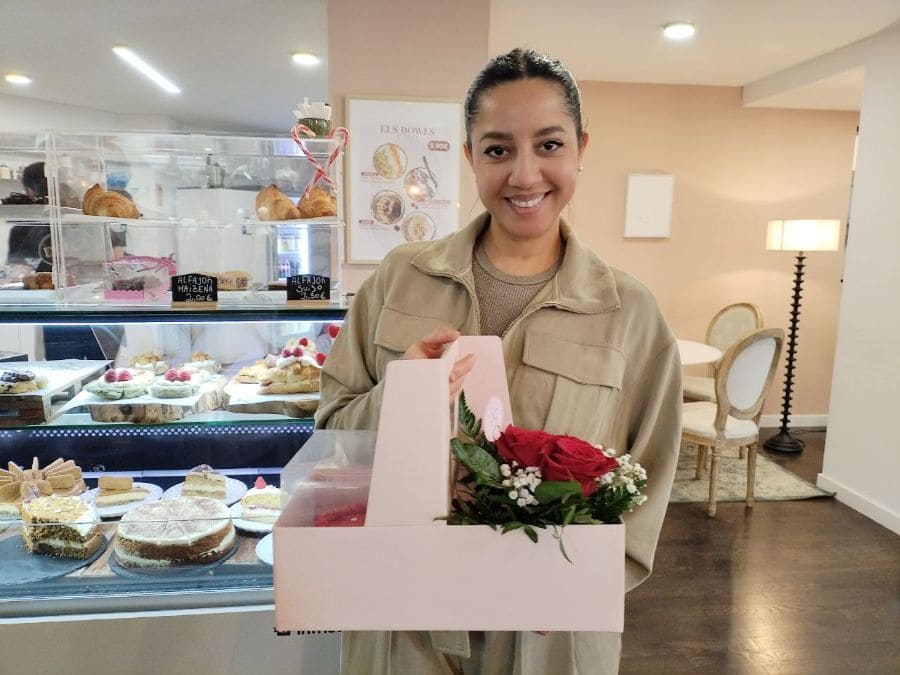
At the heart of the concept is pastry. You see it the moment you walk in: the display case puts desserts front and center. The savories aren’t what you notice first.
And yet, we do offer savory options, especially at lunchtime: toasts, bagels, savory crepes… But that’s not what we highlight. The focus remains on pastries and drinks. I make a point of offering healthy, natural drinks: homemade juices, and hot beverages like “curcuma latte”, matcha, and chai, prepared with natural spices. And of course, all our pastries are homemade.
If you don’t see the savory items in the display case, it’s because they’re made to order, to guarantee maximum freshness. At every step, we follow a simple guiding principle: homemade and natural.
And beyond the menu, did you design the space to make it family-friendly, as part of the concept?
Yes. My customer base has evolved, but it also reflects my personality. The atmosphere is very “family and kids” here. In some places, you’ll see lots of single tables and power outlets for students or people working on their laptops. We have a library with cookbooks and children’s books, a cabinet full of toys, high chairs… Everything is designed so families feel comfortable, including those with babies.
What kind of gastronomic style have you chosen?
If you look at the menu, most of the cakes have an Anglo-American inspiration: brownies, carrot cake, donuts… But I reinterpret them in a French style. In the United States, for example, buttercream is used a lot. I prefer finer pastries with lighter creams, more in the French tradition like mascarpone.
When it comes to flavors, we love pistachio, chocolate, and fruit. We also offer a homemade gluten-free range, a few no-sugar options, and lactose-free alternatives. And “no sugar” doesn’t mean “no pleasure” – you can still enjoy a chocolate dessert in a whole new way.
Is there a family recipe that’s particularly close to your heart, something exclusive or truly special?
Cupcakes have a special place in my heart. I used to serve them in my tea room in France, though I haven’t fully rolled them out here yet. They may look simple, like small muffins, but back in France, they were our best-selling pastry. We baked about a hundred a day, always fresh that very morning.
Today, I’ve adapted the recipe here, but only made-to-order. Some customers already ask for them, and this specialty will soon return to the menu more regularly.
Is there a difference in taste preferences between France and Andorra?
Keeping the same spirit as in France, I’ve had to adapt to a different clientele and different habits. My display case in France wasn’t the same as it is here.
I quickly noticed that people here tend to prefer croissants and other breakfast pastries, and bakery items in general over desserts. But we also have loyal customers who come specifically for our pastries.
What works especially well are shareable cakes. They’re fairly classic in format, but the homemade touch reassures people and wins them over.
Was it difficult to earn customers’ trust at the beginning?
I’d say the concept was embraced fairly quickly. From the start, customers would taste the pastries, ask questions, and show genuine curiosity.
Social media helped tremendously. I often hear from customers that they can feel the love I put into my cakes through my posts.
When it comes to ingredients, I try to keep the number of suppliers low and prioritize quality: many French raw ingredients, along with select products from Italy or Iran for pistachios, and vanilla from Madagascar. You could use flavorings, of course, but that’s not part of my values.
Trust built gradually, naturally. I communicate in Catalan, and we make sure everyone understands at least the basics. The goal is also to reach the local Catalan and Andorran clientele – the people who live here year-round.
Why is it good to enjoy pastries once in a while?
Because we all need it. I’m in favor of reducing sugar and being mindful, for example, our no-sugar pastries, like banana bread, are naturally sweetened by the banana.
For our spirits, we all need a small indulgence: a pastry. Chocolate makes you feel good. You work all week, you watch what you eat… a small weekend treat, guilt-free, really matters.
And if you prefer something lighter, there’s always a bowl: plain yogurt or fresh fruit. It’s a smaller pleasure, but still a moment for yourself.
A few words about your team. How many of you are there?
Today, Dolça relies on five employees (we were seven in December, during the Christmas market season). We remain a human-scale operation, focused on a coherent project: turning a life change into a warm, lasting, and welcoming place at the heart of Andorra.